
How much can you safely accomplish when you have only 25 minutes to work underwater?
For diving teams working in energetic tidal environments, operational windows can be extremely limited. Careful planning, preparation and an understanding of the hazards are essential.
In a presentation developed during ARMSA Academy’s IOSH Approved Managing Safely for Wind Power programme, Callum Johnson, Operations Engineer at MeyGen, explores the hazards associated with diving operations in offshore wind and tidal energy.
His presentation was selected by fellow delegates for recognition, and we’re pleased to share it as part of our Safety Through Their Eyes series.
Watch Callum’s full presentation: Hazards of Diving Operations
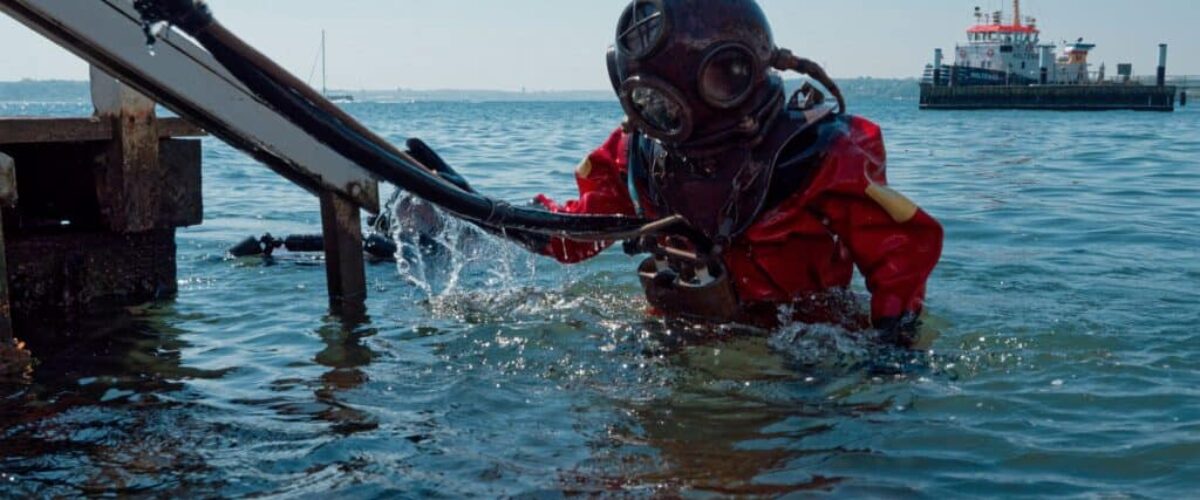
Callum examines the hazards associated with commercial air diving, the potential consequences of exposure, and the measures used to manage risk. He also draws on practical experience from tidal energy operations, where challenging environmental conditions place significant demands on planning and execution.
Understanding the hazards of diving operations
Diving operations introduce a range of hazards that need to be considered throughout the construction, operation, maintenance and decommissioning of offshore renewable energy assets.
In his presentation, Callum groups these into three categories:
Physiological and pressure-related hazards, including decompression sickness, arterial gas embolism, nitrogen narcosis and oxygen toxicity.
Mechanical and environmental hazards, including strong currents, cold water, poor visibility, entrapment and contact with underwater structures.
Operational and industrial hazards, including underwater tool use, manual handling, exposure to harmful substances and failures involving diving equipment or umbilical systems.
Understanding these hazards is only the beginning. The more important question is how they are anticipated, assessed and controlled before people are exposed.
When 25 minutes is your operational window
One of the most interesting examples in Callum’s presentation comes from his experience at MeyGen.
He describes diving work undertaken in an energetic tidal environment, where the available slack-tide working window was approximately 25 minutes.
With two such windows during daylight operations, the team had around 50 minutes of potential underwater working time per day.
To make effective use of the limited opportunity, the work was fully rehearsed on land.
This example illustrates why effective risk management depends on much more than having procedures in place. The conditions in which work is performed, the resources available, the sequence of activities and the preparation of the people involved all influence how safely work can be executed.
Can the need for diving be designed out?
Callum also highlights the importance of considering diving requirements during engineering and design.
He explains that MeyGen plans its operations to be diverless and communicates this requirement to its turbine engineers.
Nevertheless, diving became necessary on two occasions to undertake emergency repair work involving export cables and turbines. Callum explains that the underlying faults originated in design issues, which were subsequently fed back to the turbine designers.
This raises an important question for renewable energy projects: how early are future inspection, maintenance and recovery requirements considered when engineering decisions are made?
Design decisions can influence the exposure of operational teams to hazards long after an asset enters service.
Where reasonably practicable, eliminating the need for a hazardous activity provides an opportunity to reduce exposure before operational controls become necessary.
The interaction between hazards
Callum concludes with another important observation: harm does not necessarily arise from one hazard in isolation.
A diving operation may be carefully planned, but its risk profile can change when multiple hazards interact or when other activities introduce additional exposure.
His presentation draws attention to the importance of considering these interactions, rather than assessing each hazard independently.
Putting learning into practice
This presentation was prepared as part of Module 3, Understanding Hazards, within ARMSA Academy’s IOSH Approved Managing Safely for Wind Power programme.
Delegates apply their learning by researching and explaining hazards relevant to their working environments, presenting their findings and discussing them with fellow professionals.
The exercise encourages participants to connect technical knowledge with the realities of planning, supervising and managing work in renewable energy.
Callum’s presentation is an example of the experience and perspectives that delegates bring to that learning process.
Congratulations to Callum on being selected by his peers, and thank you for allowing us to share his work with the wider industry.