Observations from working alongside offshore wind operational teams, and why knowledge infrastructure may become one of the sector’s biggest differentiators…
What offshore wind operational teams are revealing about human readiness
Over the past few years, I have spent significant time with operational teams in offshore wind. Not just in meetings or workshops, but on site, on vessels, and in the conversations that only happen when you take the time to understand how teams actually work, what pressures they are under, and where things quietly go wrong.
That experience shapes how I read the headlines about Ireland’s offshore wind aspirations, and it is why I think there is a critically important conversation still not happening enough.
The ambition is clear. Ireland’s first phase of development is targeting 5GW of offshore wind by 2030, and that is only the starting point. The Offshore Wind Technical Resource Assessment has identified a potential of 3.5GW to 18GW of additional fixed offshore wind capacity beyond that initial target, before floating wind technology is even factored in.
The scale of what is being planned is significant, and the direction of travel is not in doubt.
There is genuine momentum. And for organisations positioning themselves to be part of it, that momentum represents a serious commercial opportunity.
But the sector still is not asking one question loudly enough.
Are we investing in the right things to make this work?
We measure everything except the people
When I visit sites and spend time with teams, I see an impressive display of technology dedicated to monitoring the performance of physical assets. Digital sensors, condition monitoring systems, predictive analytics. The sector has become very good at identifying when a component is underperforming before it causes a problem.
What I rarely see is organisations applying that same rigour to understanding whether the people building and operating these assets have what they need.
Are team members able to access the right knowledge, in the right format, at the moment they need it? When someone searches for information in the field, do they find what they are looking for? When they do not, does that signal reach anyone who can act on it?
In my experience, the honest answer for most organisations is no. Not because the commitment is absent, but because the infrastructure to surface those signals simply does not exist.
It reflects a wider pattern across the sector.
And it matters here, now, because Ireland does not have the same runway that more established offshore wind markets had. Organisations are still identifying, training and recruiting many of the people who will build and operate these assets from industries with very different operating contexts. That gap will not close on its own. It needs to be deliberately managed.
And the time to start is not once assets are in the water. It is now.
Operational readiness starts long before assets reach the water
In the conversations I have with organisations, there is still a tendency to treat knowledge transfer as an operational concern. Something to address once projects are live and teams are fully in place.
That instinct is understandable, but it is also costly.
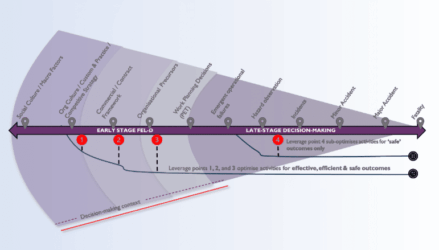
Working with operational teams across offshore wind has shown that the decisions made during development shape what people know, and what they do not know, through every stage that follows.
Knowledge gaps that create problems during construction and operations rarely appear from nowhere. The signals are usually there much earlier if the right structures exist to surface them.
Organisations that recognise this early and build knowledge infrastructure into planning from the outset carry a measurable advantage into construction and long-term operations. Those that treat it as someone else’s problem often discover the consequences at the worst possible time.
For organisations entering Ireland’s offshore wind sector now, there is an opportunity to build these foundations properly from the start rather than retrofit them later, when the cost, complexity, and operational impact are significantly higher.
What does a knowledge gap actually look like?
This is what I’ve learned from spending time with operational teams: knowledge gaps rarely announce themselves. They appear in smaller moments. A question that takes too long to answer. A governance process imported from a different jurisdiction, based on different regulatory provisions. A supervisor working from an outdated procedure because nobody identified a version discrepancy. A technician offshore searching across multiple systems for the right information while under operational pressure.
Or a team member who completed onboarding but still does not fully understand where to go when something unexpected happens in the field.
There is also a widely held assumption I’d like to challenge directly. Experience and knowledge are not the same thing. It is logical to assume that the most seasoned people on a team are also the most knowledgeable, and that knowledge gaps are primarily a concern for those who are newer to the sector.
What I see in the data from teams using h’alt®, a digital knowledge support tool deployed across offshore wind service teams, tells a different story.
Searches from experienced team members reveal something important. The need to refresh knowledge, verify a decision, or confirm a procedure is just as common amongst those with years in the industry as amongst those relatively new to it. That is not a criticism of experienced people. It reflects the reality that knowledge in operational environments is not static. Procedures change. Technologies evolve. And confidence in a decision, particularly under pressure, is not the same as certainty.
Individually, none of those things looks like a major issue. Collectively, and at scale, they become a safety, performance and commercial risk.
Knowledge infrastructure may become offshore wind’s biggest differentiator
Most organisations developing offshore wind capability already have detailed plans for physical infrastructure. Technology investment. Supply chain strategy. Procurement. Delivery timelines. And they review these plans regularly and treat them with the seriousness they deserve.
But how much of that same attention is being given to what people will know, how they will access that knowledge under pressure, and how gaps will be identified before they become something more serious? From the conversations I’ve had with our clients and users, it’s clear that the human readiness question needs to be tackled sooner rather than later.
Ireland has a genuine opportunity here. Not just to build an offshore wind industry, but to build one that learns from the experience of markets that came before it. The physical infrastructure challenge is already being funded and planned for. The human readiness challenge is still not.
That gap will define more than most organisations realise, and therefore those that treat knowledge infrastructure as a commercial, performance and safety priority, not an afterthought, will be better placed at every stage of what comes next.
Failing to act now will see Ireland’s offshore wind sector competing with other high-growth markets for talent who feel invested in. And is that yet another delivery risk we want to add to the project risk register?
Sources: Offshore wind targets and Technical Resource Assessment figures: Aisling Greene, ‘Post-2030 vision for offshore renewable energy’, Energy Ireland, October 2025. Energyireland.ie